A dozen or years ago, I watched the Planet Earth series for the first time. I watched the entire series with enthusiasm, as it introduced me to groundbreaking form of wildlife cinematography. Each animal story was framed inside its ecology, to illustrate beautifully the food web.
Each episode of the series would focus on specific biomes, and one of those was Cold Waters, referring mostly to waters in the Pacific Northwest. It described one of the natural wonders of the BC coast - the return of the herring to the beaches where they were hatched.

 |
| Yellow brick road |
For a few days, timed with a high tide, herring will proceed to spawn in the intertidal beaches. The eggs are intended to stick on smooth surfaces like bladderwort and kelp, but billions upon billions of eggs will float away with the pounding surf and coat the beaches. About a week later, those that survive desiccation and predation they will hatch during a high tide. The congregation of fish does not go unnoticed, and sea lions, orcas, and sea birds will all gorge themselves on the buffet. It is the sheer number of spawning herring that ultimately gives their next generation a fighting chance.
 |
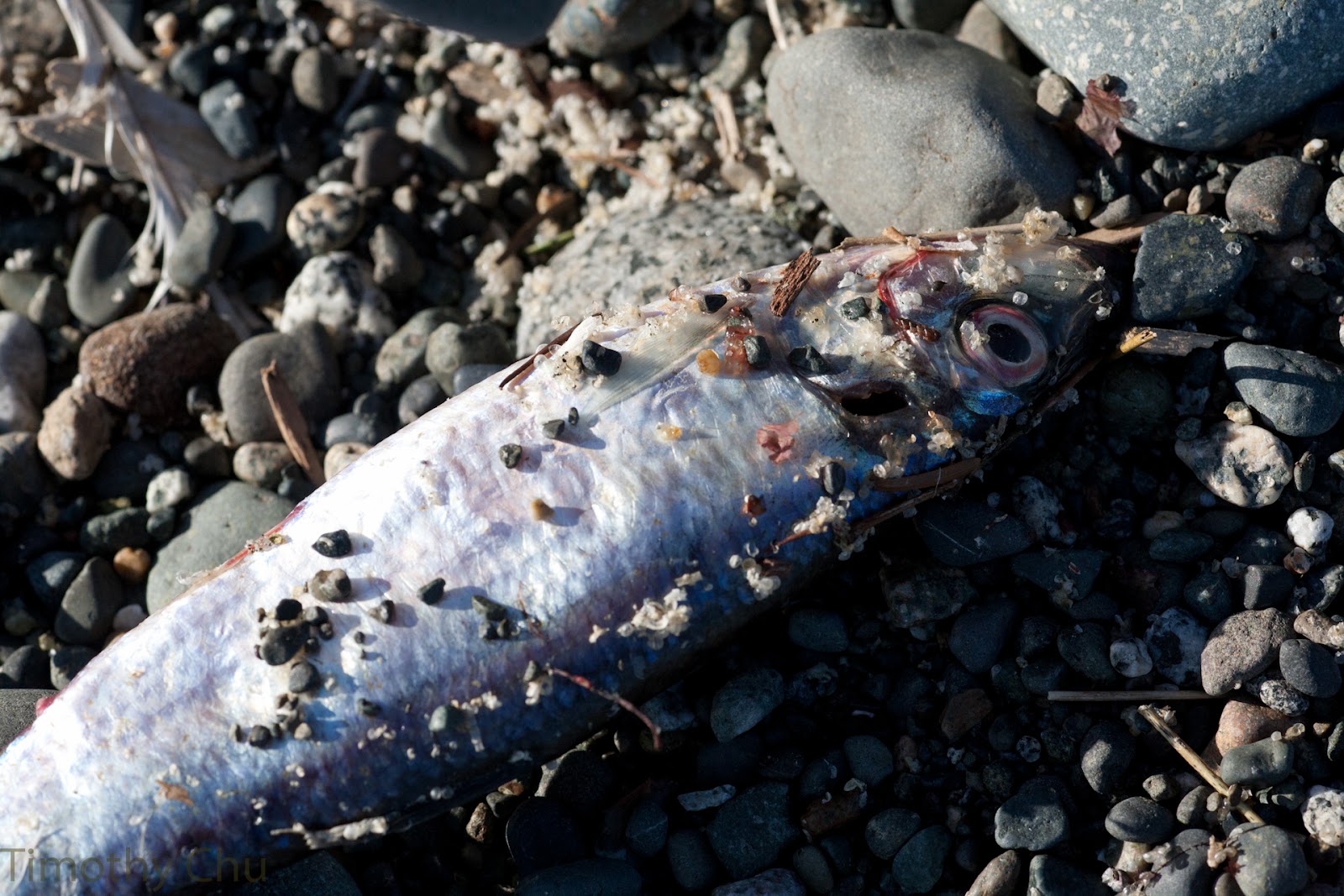
| Peering out at the world with well developed eyes |
 |
| A minute-old hatched herring next to two eggs |
 |
| Tide pools are filled centimetres-deep with herring roe. In this photo, maybe one egg might reach maturity. |
We missed the actual spawn by a few days - we were told that orcas and hundreds of sea lions passed through the week before to follow the herring.
The males employ a shotgun approach at fertilization, ejecting milt (sperm) into the water after a female has laid her eggs, turning the water an aquamarine colour.
Herring roe is traditionally used by native first nations as a food source, and I wanted to try it - I picked up a clump, and bit in. The salty crunch is no different from the Tobiko used in sushi.




 Posts
Posts

